Khorobeyev Estate
Dead SoulsKhlobuev’s estate is a visibly declining property whose neglected land, deserted village, and depleted serf population shape its proposed sale to Chichikov. Set against the productive domains of Platon and Constantine, it makes the estate’s poverty tangible before the negotiations reveal the scale of its losses.
Setting and Condition
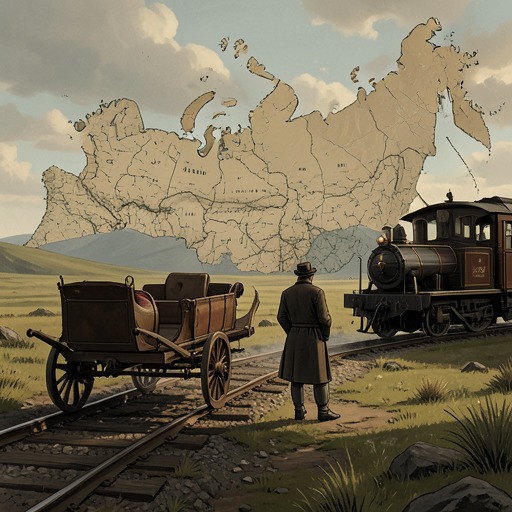
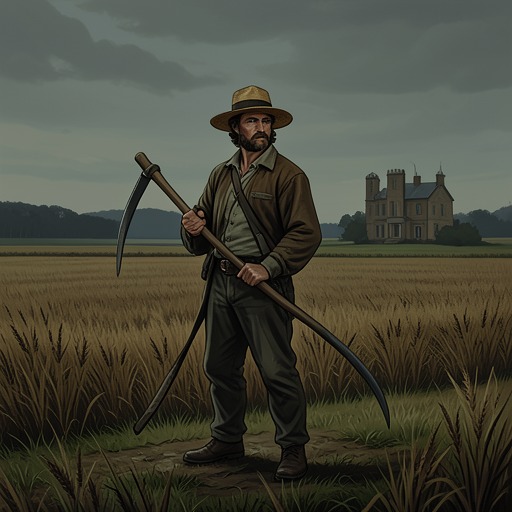
The journey to the estate first passes through forest and cultivated land belonging to Platon and his brother-in-law. Once those domains end, the landscape changes: forest gives way to swamp, cultivation to waste. The contrast makes the estate’s deterioration legible in the road itself, before the travelers reach the village, which has a deserted air.
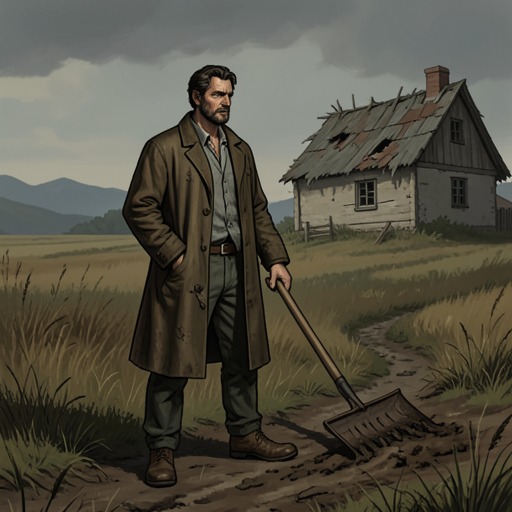
Khlobuev’s appearance carries the same signs of want. He has only recently risen, his cravat is crooked, his frockcoat bears a large stain, and one boot is worn through. He welcomes his visitors warmly, but explains that he cannot afford to have the boot mended. The owner’s shabby clothing is not incidental to the estate’s condition; it offers a personal counterpart to the neglected property.
The Proposed Sale
Chichikov visits with Platon and Constantine, who has agreed to help finance the purchase with a loan of ten thousand roubles, without interest or formal security. Chichikov is in high spirits at the prospect. Khlobuev, by contrast, says that people generally avoid him because they assume he will ask them for money, a reputation he admits is deserved. The proposed transaction thus begins amid both financial need and a degree of candor about the seller’s circumstances.
After inspecting the property, Chichikov says it is in much worse condition than he expected and asks Khlobuev to name the lowest possible price. Khlobuev agrees that the estate is in a terrible state and asks thirty-five thousand roubles. His price is tied not only to the land’s physical decline but also to the condition of the people registered to it.
Population and Legal Burden
Khlobuev reports that of the hundred serfs recorded at the last revision, only fifty remain alive, after severe losses from cholera. Some of the survivors have absconded. He says they must also be reckoned as dead for practical purposes, since pursuing them through legal proceedings would cost so much that the property would pass in its entirety to the legal authorities.
The estate’s sale therefore turns on a gap between its registered population and its actual, diminished one. The figures give concrete measure to the devastation, while the absconded serfs show how legal status and economic reality diverge. Chichikov begins haggling over the stated price, making the estate’s losses part of the bargaining over its transfer.